How do Avocado AI and HeyGen compare feature by feature?
The table lists what each tool ships today, capability by capability. Avocado AI is a full creative workspace; HeyGen is compared on the same rows so the gaps and ties are visible at a glance.
| Capability | Avocado AI | HeyGen |
|---|---|---|
| Photoreal avatar talking heads | UGC studio creators, ready-made or your own look | Best in class for avatars |
| Image generation models | GPT Image 2.5, Nano Banana 2, Seedream 5.0, Soul 2 and more | Avatar templates only |
| Video generation models | Seedance 2.5, Kling 3.0, Veo 3.1, MiniMax H3 and more | Avatar video only |
| Brand DNA and product references | Product photos as template overlays | |
| AI music generation | Audio Studio | |
| Voice generation and cloning | Voice clones, voiceover | |
| Shared canvas to repeat workflows | Flows | |
| Built-in AI agent with brand memory | Super Agent (Growth and Pro) | |
| Timeline to assemble a cut | Director mode in Flows | Avatar editor only |
| Entry price | EUR 19.99 per month (Intro) | 29 dollars per month |
If you are evaluating HeyGen and Avocado AI, the right question is not which one makes a better avatar. HeyGen makes a great avatar. The right question is which one fits the way your team ships ad creative. The two products sit in different categories despite some overlap.
What HeyGen is best at
HeyGen built a strong avatar engine. Pick a presenter, paste a script, choose a voice, and out comes a talking head ready to drop into a sales deck, an explainer, or a paid social ad. For B2B sales, training videos, and corporate communications, that loop is genuinely useful. It collapses a recording day into ninety seconds.
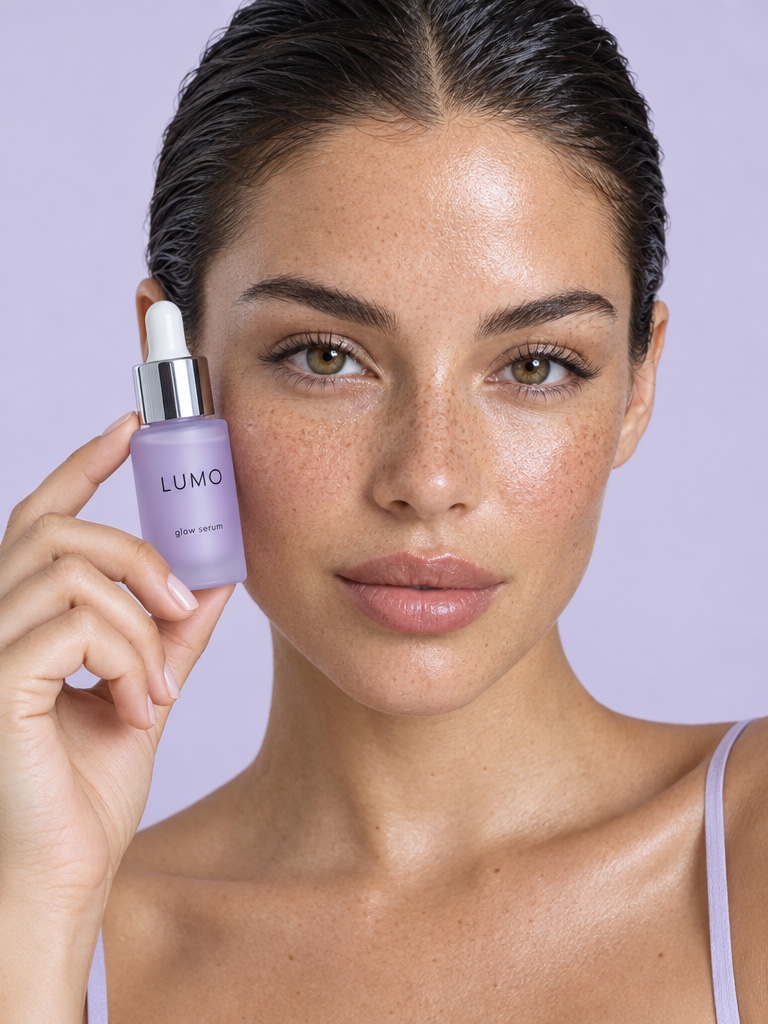
For a 7-figure DTC skincare brand, the avatar is rarely where the ad lives or dies. The skincare buyer scrolls past the talking head and locks onto the bottle. They register the dropper, the label, the pantone, the texture of the serum on a hand. If the product looks right, the avatar lands. If the product looks off, the avatar cannot save it.
Where Avocado fits
Avocado AI is one creative system with three ways to work. Studio is where you make things: an image workbench, a video workbench, a UGC studio and an Audio Studio in one workspace, on one credit balance, with every result saved to one library. Flows is where you repeat things: an infinite canvas where you chain prompt, image, video, music and voice nodes and run the whole chain again for the next product. Super Agent, on Growth and Pro, is where you delegate. Brand DNA carries your products, references, visual direction and tone into every generation.
The image lineup includes GPT Image 2.5 Flare as the default, plus Nano Banana 2, Nano Banana Pro, Seedream 5.0 Pro, Soul 2 and Recraft v4.1. The video lineup includes Seedance 2.5 for cinematic b-roll, Kling 3.0 for stylized social motion, Veo 3.1 for brand films with native audio, MiniMax H3 and LTX-2, among others. HeyGen does the avatar very well, but it does not do the rest of the chain. The product hero shot, the cinematic pack shot, the music bed, the shared canvas and the assembled cut all happen elsewhere when you build around HeyGen.
Avatar quality
HeyGen is best in class for photoreal avatar talking heads. Lip sync is convincing, the catalog of presenters is large, and the workflow is faster than recording a video yourself. For an avatar ad, HeyGen wins on this single dimension.
Avocado has a UGC studio instead of an avatar catalog. Pick a creator look, ready-made or your own, write a script, and get a talking video in 9:16, 1:1 or 16:9, up to 30 seconds long. Fast UGC on Happy Horse 1.1 is the default engine, Talking head lip-sync pairs Fabric with text to speech, Seedance 2.5 handles long-form takes with native audio, and HD UGC runs on MiniMax H3 MAX Turbo. Raw presenter fidelity is not where Avocado tries to beat HeyGen's best presenters. The difference is the product: when you attach one, the UGC studio first edits the look with GPT Image 2.5 Flare so the creator holds your real product, then animates it. For a brand that needs both a talking creator and a cinematic pack shot, Avocado wins on integration even if HeyGen wins on raw avatar fidelity.
Product accuracy and Brand DNA
HeyGen does not build a persistent product identity. Product photos go in as overlays on avatar templates.
Avocado works from your real product. Save your products and references in Brand DNA, then edit from your real product photos with reference-based edit models such as GPT Image 2.5 Flare or Nano Banana 2, so the label and pack stay the product's own. That still can become the first frame of an image-to-video clip, so the product holds in motion too. Brand visual styles can be locked, and products can be remembered and reused as references across a whole campaign. For a 7-figure DTC skincare brand, this is the load-bearing feature.
Voice, music, and the assembled cut
HeyGen handles the avatar voiceover natively. It does not generate music or assemble a multi-shot brand ad, so most teams pair HeyGen with a music tool and a separate editor.
Avocado keeps voice and music in Audio Studio, inside the same workspace that produces the stills and clips. Fish Audio S2 Pro is the default voice model, with ElevenLabs and Seed Audio also available. You can clone your own voice or design a new one from a description, generate music beds of 30 to 300 seconds with MiniMax Music 3 or ElevenLabs Music, and add sound effects. Director mode in Flows then gives you a timeline to assemble the cut with music, pulling from your library with cast, location and beat references. One workspace, one team, one credit balance.
Repeat and delegate
HeyGen is built around producing avatar videos one at a time. Avocado adds two layers on top of making. Flows lets you build a chain once, from product photo to hero still to motion clip to voiceover, and run it again for the next SKU in one click, with real-time collaboration and comments for the team. Super Agent, on Growth or Pro, plans a month of posts in one chat, creates on-brand images, videos, music and captions, and schedules and publishes them to Instagram, Facebook, TikTok, LinkedIn, X and Threads after your approval. Publishing needs the Connectors add-on. If your team already works in Claude, Codex or Cursor, the Avocado MCP server gives that agent the same tools and credits.
Pricing
HeyGen currently lists pricing from a free tier with watermarks, then twenty-nine dollars per month for Creator, ninety-nine dollars per month for Pro, one hundred forty-nine dollars per month for Business, and custom Enterprise pricing (per heygen.com/pricing, checked May 2026).
Avocado plans start at EUR 19.99 per month (Intro, 100 credits). Starter is EUR 39 (300 credits), Growth EUR 99 (800 credits) and Pro EUR 249 (2,000 credits), with 20% off on yearly billing. Studio and Flows are on every plan, with commercial rights, no watermarks, and credits that roll over for up to a year. Super Agent needs Growth or Pro, and publishing plus Meta Ads also need the Connectors add-on. For a small team that needs stills, video, voice, and music, one Avocado plan typically replaces three or four standalone subscriptions, which usually nets out cheaper than stacking HeyGen Business with a video generator, a music tool, and an editor.
Where each tool wins
HeyGen wins when the job is high-volume avatar talking-head video, especially for sales, training, and corporate explainers where the avatar is the entire ad and product fidelity is not the constraint. The avatar fidelity and the workflow speed are best in class for that job.
Avocado wins when the job is a brand ad where the product has to look right, the team has to align, and the work has to repeat every week from one workspace. The combination of image and video models, a UGC studio, Audio Studio, Flows and Super Agent is purpose-built for that cadence.